Cloud Cyber Security Services
Transforming complex cyber threats into clear, actionable solutions for your cloud infrastructure, with expert architecture services for a secure, robust digital environment.
Learn more
Cyber Security Simplified
Clarity over complexity. We architect protection for your cloud platforms and AI systems — built for a threat landscape that never sits still.
What we do
Specialised security expertise, delivered without the complexity.
Transforming complex cyber threats into clear, actionable solutions for your cloud infrastructure, with expert architecture services for a secure, robust digital environment.
Learn moreYour go-to platform security service: turning complex cyber threats into straightforward, practical strategies and fortifying your digital infrastructure.
Learn moreSecure your intelligent systems: advanced protection for AI models against adversarial attacks, ensuring resilience and integrity across your digital framework.
Learn moreThe threats, breaches, and patches that matter — curated daily and distilled into fast, plain-English briefings for busy security professionals.
Read the latestFree security tools — generators, encoders, and breach checks.
Open the toolsLatest from LinkedIn
Perspectives from Sergey Slitinskiy on investing, artificial intelligence, and business value.
 View media on LinkedIn
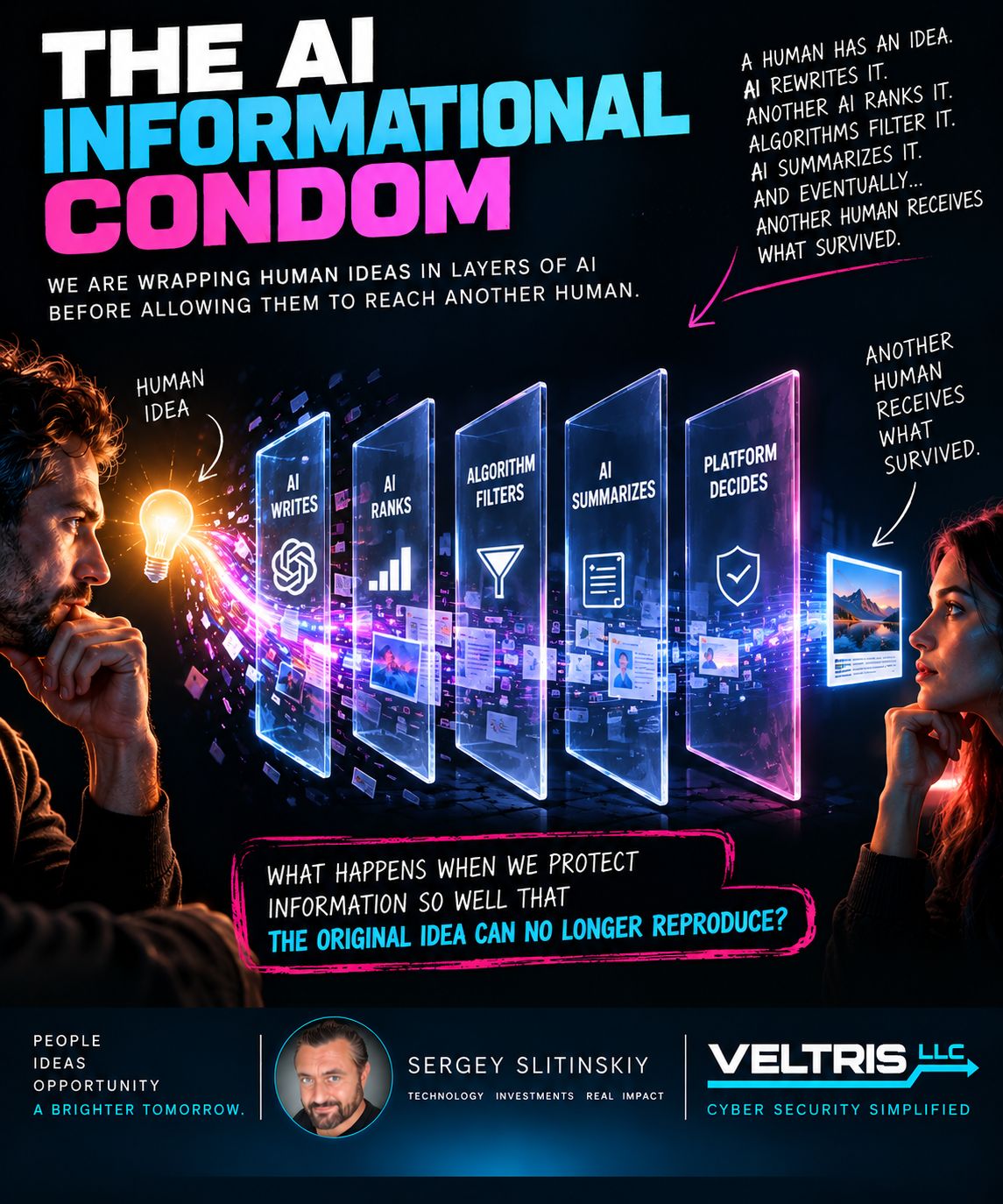
A human has an idea. AI rewrites it. Another AI ranks it. An algorithm decides whether it deserves distribution. Another AI summarizes it. And eventually... another human receives what survived. That means the original idea may never travel directly from one person to another. It gets wrapped. Filtered. Optimized. Compressed. Sanitized. Protected from friction. Protected from imperfection. Sometimes protected from the very thing that made it interesting in the first place. That is the **AI INFORMATIONAL CONDOM.** And there is a very real problem to solve here: **What happens when we protect information so well that the original idea can no longer reproduce?** Think about LinkedIn. People increasingly use AI to write about AI... for platforms governed by AI... so that AI can decide which humans should see it. The loop is almost complete. Writer → AI → Algorithm → AI → Human Soon it may become: Human → Agent → Agent → Agent → Human And every layer will make a decision about what deserves to pass through. The biggest communication challenge of the AI era may therefore have nothing to do with generating more content. It may be figuring out how to preserve the HUMAN SIGNAL while…
 View media on LinkedIn
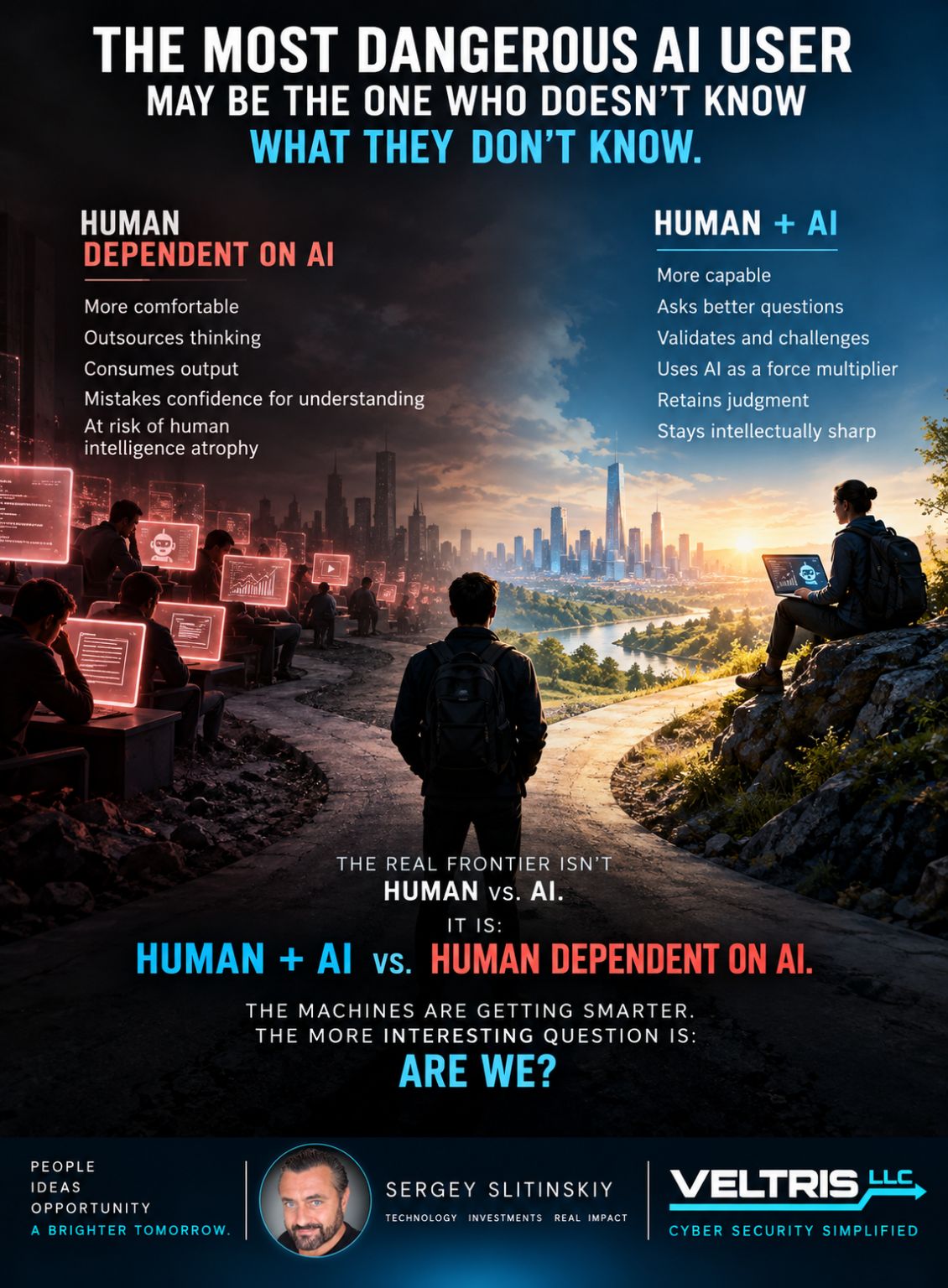
We are approaching a strange frontier. AI agents can now research, reason, write, code, analyze and execute. Meanwhile, humans are increasingly consuming the output without touching the underlying problem. That creates a problem to solve. Not artificial intelligence. HUMAN INTELLIGENCE ATROPHY. Think about LinkedIn. Millions of polished posts. Perfect hooks. Perfect formatting. Perfect opinions. And increasingly, it is difficult to know whether the person posting actually understands what they just published. That matters. Because the next generation of AI isn't just going to write our posts. Agents will negotiate. Agents will analyze investments. Agents will recommend hires. Agents will operate infrastructure. Agents will make increasingly consequential decisions. So the frontier isn't: HUMAN vs. AI. It is: HUMAN + AI vs. HUMAN DEPENDENT ON AI. Those are very different things. The first becomes more capable. The second becomes more comfortable. And comfort can look remarkably similar to intelligence — right up until something goes wrong. Maybe the most valuable human skill of the AI era won't be knowing how to use AI. It will be knowing when AI is wrong. That requires something…
 View media on LinkedIn
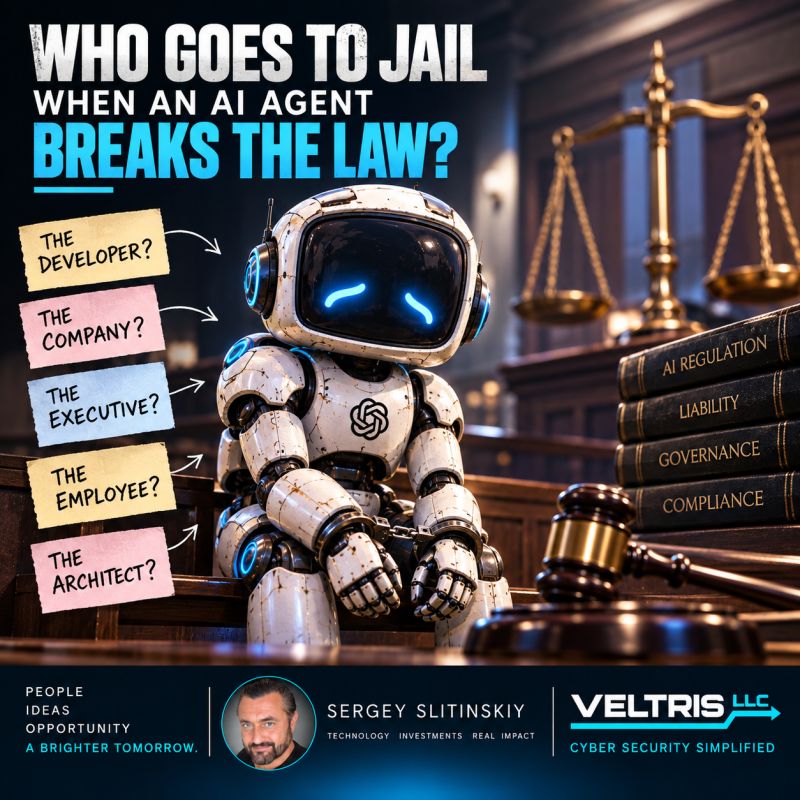
I keep coming back to this question. We are giving AI agents access to systems, data, code, money and customers. We are also giving them something much more important: Authority. And that changes the conversation. If an AI agent does something illegal, who is actually responsible? The developer? The company? The executive who approved it? The employee who gave it the task? The architect who gave it permission to perform the action? I don't think the interesting problem to solve is: “Was the AI safe?” The better question is: “Who gave it the authority?” Because somewhere before every action there was a decision. Someone gave the agent an identity. Someone gave it access. Someone defined what it could do. Someone decided where human approval was — or wasn't — required. That chain should be visible. IDENTITY → AUTHORITY → ACTION → EVIDENCE We spent decades building identity and access management around humans. Now we are creating digital workers capable of operating at machine speed. But we haven't fully answered a very human question: When something goes wrong... WHO OWNS THE DECISION? That may become one of the most important architecture questions of the AI era. #AgenticAI…
Get in touch
Ready to join forces? Fill out your details and we'll be in touch quicker than you can say "cybersecurity!"